When you buy through tie on our site , we may earn an affiliate commission . Here ’s how it works .
scientist aboard a research vas were deal to a sighting of the world ’s turgid bony Pisces : the Mola mola .
The gigantic Mola mola is the heaviest of all thebony fish . These fish can measure 14 feet ( 4.3 cadence ) vertically and 10 feet ( 3 m ) horizontally , and count closely 5,000 pound . ( 2,300 kilograms),according to National Geographic . Because the Mola mola ’s back fin never turn , it has a bullet - like shape and take care like a slow - swimming saucer .
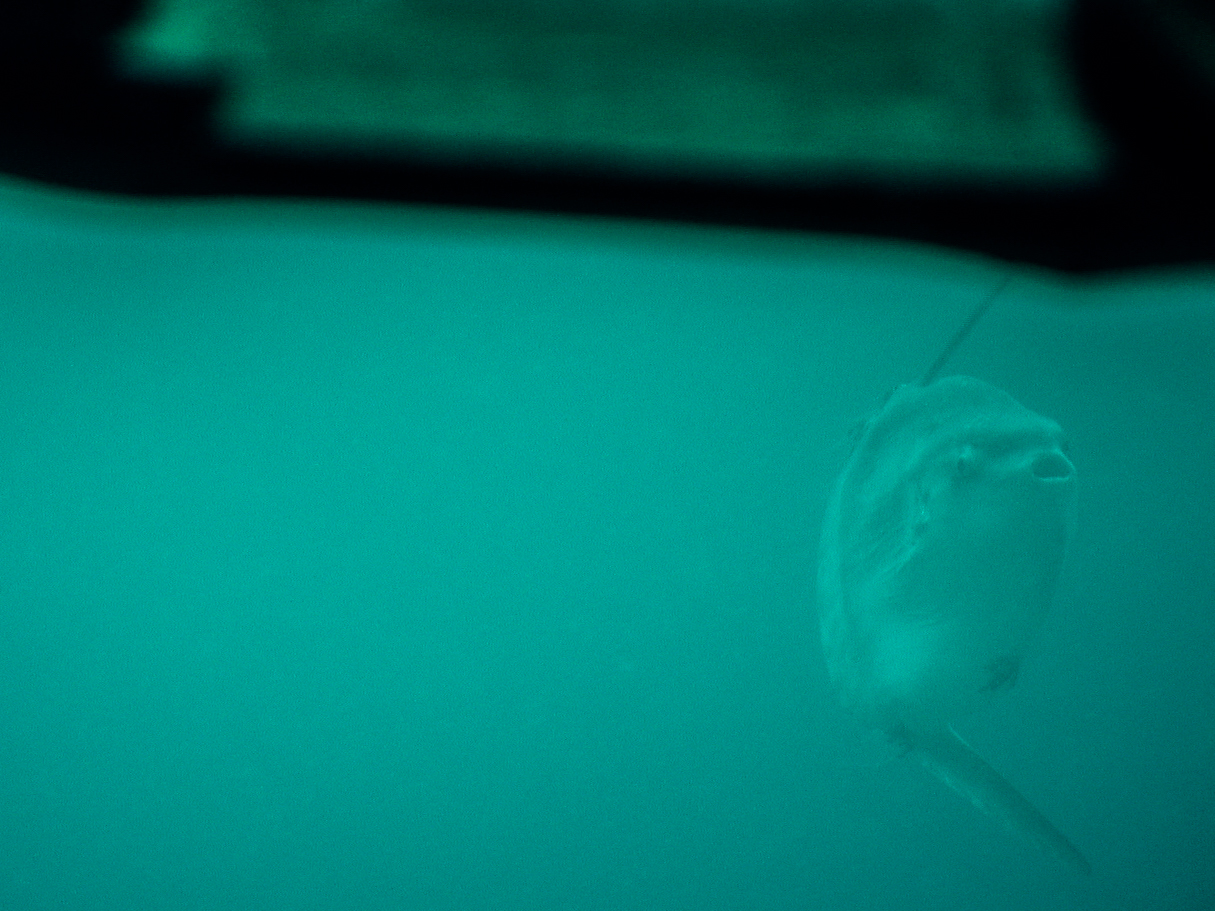
Scientists aboard the E/V Nautilus spotted the world’s largest bony fish, the Mola mola.
The Mola mola , also get laid as an ocean ocean sunfish , is ordinarily seen throughout the world ’s oceans and is view evolutionarily sophisticated as they are imagine to be one of the most late fish families . However , scientists know very footling about the bony fish . [ What the Heck ? ! Images of Evolution ’s Extreme Oddities ]
" Their actual biological science is relatively little known , " Rich Bell , a fisheries scientist aboard the Exploration Vessel ( tocopherol / V ) Nautilus , who was part of the squad that saw the Mola mola , told Live Science . " Mating , their growth , migration practice , are not specially well - do it . "
Despite its bizarre shape and large size , the Mola mola can really set up itselfout of the waterinto the air , according to Katelyn Standerfer , a science communication fellow aboard the E / V Nautilus .

" They ’re just such odd - looking fish , " Standerfer told Live Science . " They fascinate me because there is so little known about them despite their large size . Seeing one on our dive was the highlighting of my trip aboard the E / V Nautilus . "
The watercraft is currently on a four - month excursion to explore the easterly Pacific Ocean . operate by the Ocean Exploration Trust , a nonprofit governing body constitute by oceanographer Robert Ballard , the tocopherol / V Nautilus ' military mission is to explore the oceans and seek out the strange . On retiring outing , the research vas has discoveredpreviously unobserved shipwrecksandelusive sea creatures . Just last calendar week , the researchers found amysterious purple sea orbthat scientist have yet to discover .
Spotting ocean creatures during these expeditions , though perhaps not the verbatim mission of the military expedition , supply samples and observation for a mountain chain of disciplines and scientist , concord to the E / 5 Nautilus squad . sighting of know fish , such as the Mola sunfish , can thrive scientific knowledge about the range or depth of the coinage , state E / 5 Nautilus representative Susan Poulton . It is also possible for the researchers to keep new behaviors of the fish ,

The exploration vessel ’s use of remotely operated vehicles can modify the scientific results , however , Bell order , as the racket and light may affect what researchers see during the mission .
" We ’re never really certain if that ’s drawing sure fish toward us or scaring them forth , but our presence can affect what we see and which mintage we happen while we ’re exploring , " Bell said .
Original article onLive skill .


