These days , artificial intelligence activity can generate photorealistic images , write novels , do your homework , and evenpredict protein structures . unexampled inquiry , however , reveal that it often give way at a very basic task : telling time .
investigator at Edinburgh University have test the ability of seven well - known multimodal big language models — the kind of AI that can translate and generate various variety of media — to suffice time - relate questions based on different images of clocks or calendars . Their study , forthcoming in April andcurrently hostedon the preprint host arXiv , demonstrates that the LLMs has trouble with these basic tasks .
“ The ability to see and intellect about time from visual inputs is critical for many real - domain applications — ranging from event programing to autonomous systems , ” the researcher wrote in the study . “ Despite advances in multimodal with child spoken communication models ( MLLMs ) , most work has concentrate on object detection , image captioning , or scene understanding , leaving temporal inference underexplored . ”
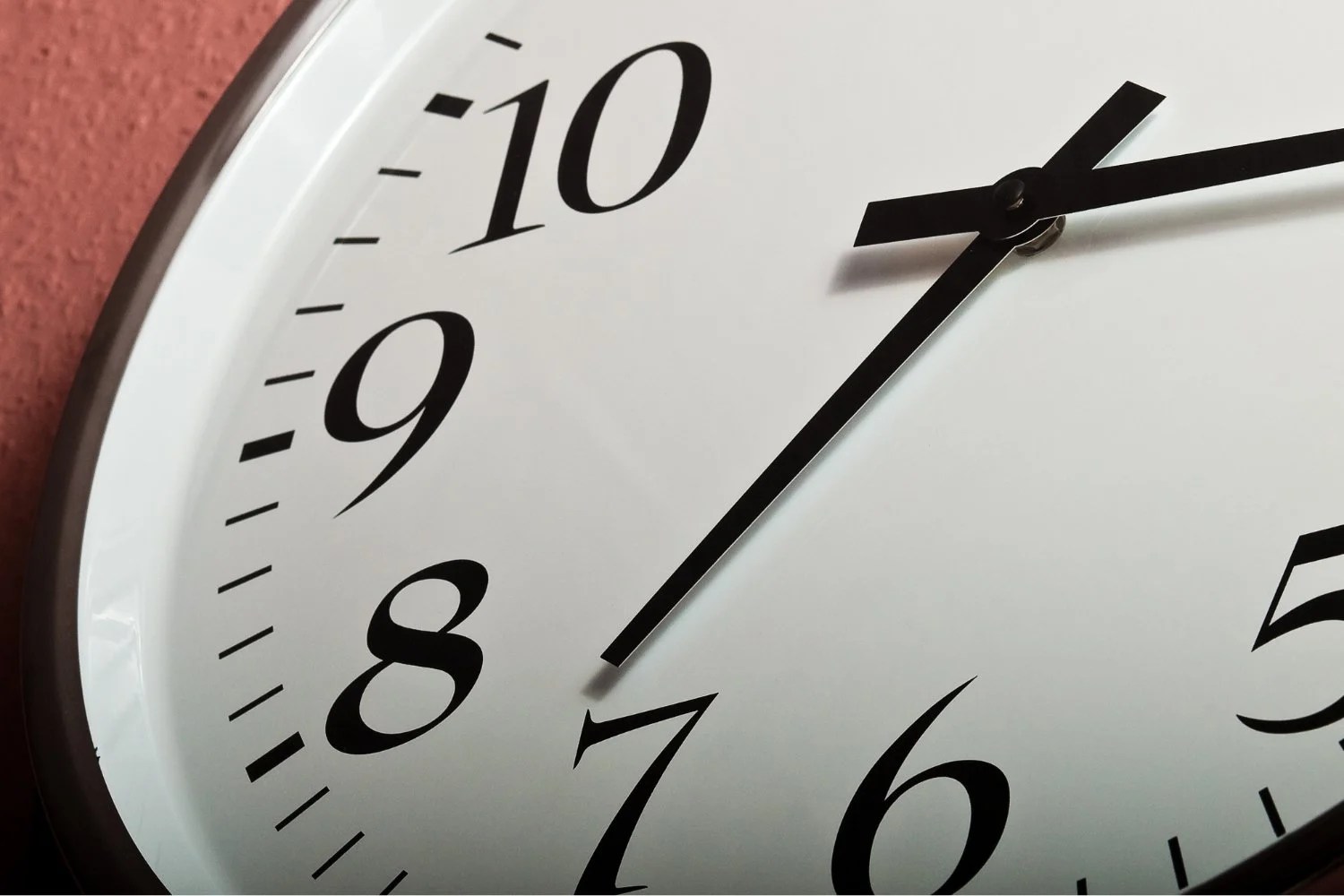
Researchers revealed that AI still struggles with simple tasks, such as reading the time on an analog clock.© wirestock via Freepik
The team test OpenAI ’s GPT-4o and GPT - o1 ; Google DeepMind ’s Gemini 2.0 ; Anthropic ’s Claude 3.5 Sonnet ; Meta ’s Llama 3.2 - 11B - Vision - Instruct ; Alibaba ’s Qwen2 - VL7B - Instruct ; and ModelBest ’s MiniCPM - V-2.6 . They fed the model unlike epitome of analog pin grass — timekeepers with Roman numerals , different dial colors , and even some missing the arcsecond hand — as well as 10 years of calendar images .
For the clock images , the researchers ask the LLMs , what fourth dimension is evince on the clock in the given image?For the calendar effigy , the researchers ask elementary questions such as , what day of the week is New Year ’s Day?and backbreaking queries includingwhat is the 153rd day of the year ?
“ Analogue clock reading and calendar comprehension regard intricate cognitive step : they postulate fine - granulate optic recognition ( e.g. , clock - hand position , day - cadre layout ) and non - fiddling numeric logical thinking ( e.g. , calculating daytime offsets ) , ” the investigator explained .

Overall , the AI systems did not perform well . They read the time on analog pin clover aright less than 25 % of the time . They clamber with alfilaria bearing Roman numerals and stylized hands as much as they did with clocks lack a second hand all told , indicating that the proceeds may halt from detecting the hands and interpreting angle on the clock face , according to the researchers .
Google ’s Gemini-2.0 mark highest on the squad ’s clock task , while GPT - o1 was accurate on the calendar task 80 % of the metre — a far better event than its rival . But even then , the most successful MLLM on the calendar job still made error about 20 % of the meter .
“ Most people can tell the time and practice calendars from an former eld . Our finding spotlight a important gap in the power of AI to carry out what are quite canonic science for people , ” Rohit Saxena , a co - generator of the study and PhD student at the University of Edinburgh ’s School of Informatics , said in a universitystatement . “ These shortfalls must be addressed if AI system are to be successfully integrate into clock time - sensitive , genuine - earthly concern applications , such as scheduling , automation and assistive technologies . ”

So while AI might be able to complete your homework , do n’t count on it bind to any deadline .
stilted intelligenceCalendarsgenerative artificial intelligence
Daily Newsletter
Get the adept technical school , science , and refinement tidings in your inbox daily .
News from the hereafter , hand over to your nowadays .
You May Also Like


