When you purchase through links on our site , we may garner an affiliate mission . Here ’s how it make for .
The 12,000 - year - old cadaver of two mini - fires and two curious sticks late within a secluded cave in southerly Australia may be grounds of the oldest make love culturally transmitted ritual in the world , a newfangled study finds .
The artifacts , which were break down in a new study that used both scientific analyses and Aboriginal unwritten chronicle , may have been used in a ritual enchantment carried out to play harm to another person .

The remains of two mini-fires and slightly burnt sticks in Cloggs Cave are evidence of what may be the oldest known culturally transmitted ritual.
The artifacts are similar to a ritual commit by the Gunaikurnai , an Indigenous radical occupy on Australia ’s southerly coast , which postulate smearing a wooden object with human or animal fat and then shed it into a ritual flaming .
give the parallels between the object in the cave and the historically attested Gunaikurnai ritual , which was recorded by anthropologists in the late 19th 100 , primal elders try out archaeological collaborators to excavate the cave , known as Cloggs Cave , and study the artifacts . Their results were write Monday ( July 1 ) in the journalNature Human Behaviour .
Cloggs Cave was partly excavate in the early seventies . In an electronic mail to Live Science , analyse first authorBruno David , an archeologist at Monash University in Australia , said " the cave was never used as a general bivouacking place , but rather only for extra ritual purpose . It first began to be used this way around 25,000 days ago , and keep to be used this way until at least 1,600 years ago . "
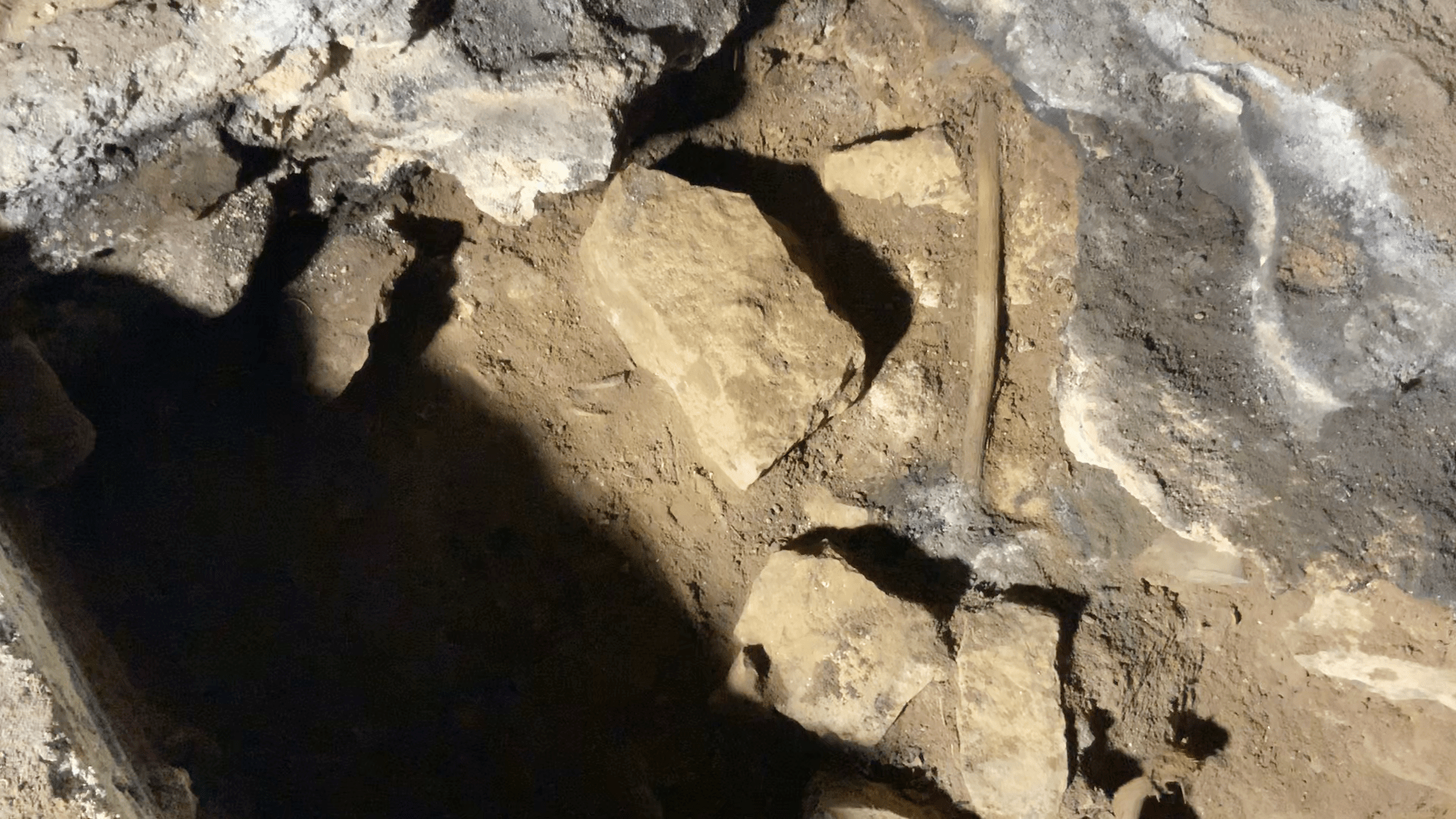
One of the ritual sticks found in Cloggs Cave in southern Australia.
A subsequent archeological site undertake in 2020 by David and his team revealed two sacred ritual installations , each comprising a small fireplace with a slightly burnt wooden stick coming out of it . carbon 14 datingof the sticks showed that one was between 11,930 and 12,440 years old , while the other was between 10,870 and 11,210 years old , making them the oldest wooden artifacts ever found in Australia .
Related : Mysterious rock music art painted by Aboriginal people describe Indonesian warships , study suggests
The team found that both sticks had been deliberately altered , suggesting past people had trimmed , prune or scraped the sticks to make them very tranquil . Further psychoanalysis showed that the sticks were bothCasuarina , a native Australian pine tree tree , and that there were patches of an unknown residue on them . Chemical depth psychology of this residual using aggregate spectroscopy — a technique that can identify individual molecules in a sample distribution — revealed the bearing of roly-poly battery-acid , indicating that part of the reefer had been smeared with animal or human avoirdupois of some sort .

Photos and illustrations of the two roughly 12,000-year-old sticks that were used in rituals.
give the lack of nutrient remains near the small open fireplace , the presence of a individual smooth stick in each hearth and the sticks ' middleman with fatty tissue , the researchers concluded that the 12,000 - yr - old installation they bring out were used for a specific ritual design — one that appears to have been passed down over 500 generations from the remnant of thelast shabu ageto very late times .
" What these fervour stick tell apart us is that this is in reality specifically about the culture of the Old Ancestors that continues to today , " David said in a transcript of a conversation with Gunaikurnai ElderRussell Mullett . " Bringing in the community way — the ethnic room — with some of the scientific techniques intend that report can be tell . "
The study sets a gamey prevention for investigating ancient ritual practice , Ben Marwick , an archaeologist at the University of Washington who was not involve in the field , told Live Science in an email .

" There are older exercise of more generic rituals , such asburial of the dead , " Marwick suppose , " but this one is special because it is a specific ritual practice that has continued from time immemorial until of late . "
— drown land off Australia was an Aboriginal hotspot in last ice age , 4,000 stone artifact reveal
— 1st Americans had Indigenous Australian genes

— 5 non - fall Aboriginal boomerangs find out in dried - up riverbed
While the archaeological work wed together 12,000 - class - old ritual objects with 19th - century historical practices is a clear scientific triumph , it also manoeuver to a deprivation of Indigenous knowledge with the colonisation and Westernization of Australia , according to Mullett .
Ethnographer Alfred Howitt record Gunaikurnai rituals in 1887 , but " if he was n’t there , that noesis may not well have been transferred on , " Mullett said . " Because we ’re spill about times of missionary work station , where the severing of ethnic noesis is occur . "

" The science can only narrate you so much , " David told Live Science in an email . " Incorporating traditional ethnic cognition provides an opportunity to tell a broader news report about the Old Ancestors and the cultural landscape painting they lived in . "


